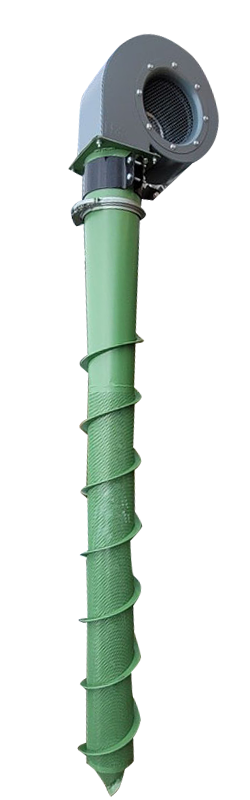








Grain aerators are designed for ventilating grain bulk, regulating temperature, and reducing moisture levels during storage. The units are equipped with either single-phase or three-phase electric motors and can operate in both air-blowing and air-extraction modes.
Proper grain ventilation helps maintain grain quality, reduces the risk of spoilage, and ensures optimal storage conditions. Aerators are used to cool grain, lower moisture content, maintain a stable temperature, and prevent self-heating processes that can negatively affect grain quality and storage life.
| Engine power, kW | 1,1 – 1,5 | 1,5 |
| Air flow, m³/h | 2400 | 2500 |
| Lenght, m | 1,5 – 3 | 3 |
| Length of Perforated Section, m | 1 – 2 | 1,5 |
| Non-Perforated Section Length, m | 1 | 0,5 |
| Nozzle length, m | 0,25 | 0,25 |
| Weight, kg | 28 | 36 |
The aerator consists of three main components:
The robust construction ensures efficient air distribution throughout the grain mass and long-term, reliable operation of the unit.
The aerator is installed directly into the grain pile by inserting the aeration pipe into the required layer of grain. A centrifugal fan generates an air stream that passes through the inter-granular space and evenly ventilates the entire grain mass.
This process helps reduce temperature, remove excess moisture, and create favorable conditions for safe and high-quality grain storage.
Grain aerators are an essential solution for ensuring safe and efficient grain storage. They help to:
By using aerators, better grain storage conditions are ensured, product quality is preserved, and the risk of economic losses is reduced.